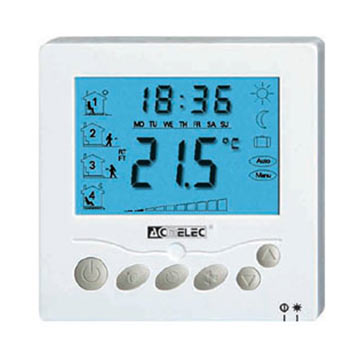
Standing pilot lights are quickly becoming obsolete. A standing pilot light presents fire and carbon monoxide dangers along with wasting gas. Electrical furnace starters are now standard on all high efficiency Denver heaters. With electric ignition, your furnace only uses energy when it needs it. This by itself can increase your SEER rating significantly.
Tuesday, August 24, 2010
Electrically Ignited Pilots in Furnaces
Standing pilot lights are quickly becoming obsolete. A standing pilot light presents fire and carbon monoxide dangers along with wasting gas. Electrical furnace starters are now standard on all high efficiency Denver heaters. With electric ignition, your furnace only uses energy when it needs it. This by itself can increase your SEER rating significantly.
Monday, August 23, 2010
HVAC Ductwork Insulation and Maintenance
Your HVAC ductwork is the series of tubes that carry treated air around the building. If you are installing a new central air or heat pump system in your house, you should make sure the ductwork that will carry your new high efficiency air conditioner is up to par with the system. As all the air flows through these ducts, any leaks or problems will ruin the effect of the whole system.
When installing or diagnosing a system for Denver HVAC repairs, a good technician will inspect all the ducts. First off he is looking to see if the existing duct system will match the new air handler that was installed. This will also show if there are any leaks or other problems. Finally, ducts should be insulated and routed in a certain way to maintain safety. This process is called checking for ductwork integrity.
The average residential HVAC system has some leakage. So you can get just as much cost saving some times in fixing the ducts as buying a new high efficiency system. If 20% of the air is leaking, then the system will have to work harder. This leads to higher bills and possible Denver furnace repairs. So do not feel shy to ask the HVAC tech to check the integrity of the ducts. It is their job after all.
In some locations your HVACR system needs special consideration. In wet areas or flood plains, the duct work needs to be water tight. After a flood, you will probably need to replace the insulation, but if the ducts were not sealed you might have to replace the ducts as well as any parts that were damaged by infiltrating water. A water tight duct is also obviously air tight.
To maintain the efficiency of this well sealed ductwork, your Denver HVAC company will install insulation around it. The insulation also serves to protect the inside of your home from the temperature variations caused by hot or cool air flowing. At these temperature change points moisture tends to accumulate. As water saturated air below the dew point gets in contact with warm beams, then it will sweat. This ruins the ducts and can cause mold and mildew problems. To counteract this make sure there is a vapor barrier between the treated air and the outside.
Tuesday, August 17, 2010
HVAC Economizers
HVAC economizers are called DDC systems in industry parlance. DDC stands for Direct Digital Control, basically computerized controls of HVAC air handlers instead of using mechanical systems to control the use of the air handler and other components. Computer technology has been able to provide dramatic energy savings for years, but the real advance recently is the ease of use for air conditioning services Denver technicians.
Monday, June 28, 2010
Programmable Thermostats and Zone Control
For a new building, installing programmable zone thermostats does not require much different other than using new ducts. For retrofitting old units, your Denver HVAC company will have to install dampers inside the existing ducts. These dampers redirect airflow to parts of the building that are not used. The actual work required to install the dampers is not much harder than a routine duct cleaning.
The effectiveness of a these new technologies can be enhanced with new geothermal heat pump products. The evolution of combined ventilation technology has reduced the overall consumption of HVAC units in the US by more than half in the last 20 years, while improving comfort and air quality.
Heat Pump Repair Mysteries
HVAC technicians must go through a significant amount of training before they are certified by their state board to work on your air conditioner. However sometimes there are customers with problems with their HVAC systems that can only be figured out with step by step deductive reasoning... and sometimes a little luck. Modern AC units are less finicky than the old ones, but they also incorporate new technology that many Denver air conditioning services companies are not familiar with.
Heat pump technology in particular has advanced quite a lot recently. While the actual operation of a heat pump is simpler than an air conditioner, one in particular required a Denver HVAC technician friend of mine a long time unravel. The unit, a R-410A heat pump was installed and operating fine in the first year. Then summer began and the owner switched the unit over to cooling. It worked fine, but after a few days the owner noticed that the fan never turned off.
Now most experienced air conditioner techs would assume this was one of two things - a minor fault in the thermostat, or damaged compressor electronics. However, as the heat increased, the unit never turned off and the house did not cool down. So of course the owner calls her nearest Denver heating company.
This is the point where the tech must take all the evidence into account in order to investigate. Of course most AC techs do not view this job as a murder mystery, but the use of logical steps that need to be taken in order to figure out the problem are similar.
The first thing he notices is that it is hot. The interior is almost 90 degrees and the compressor is obviously not wicking any moisture out of the air. However at the compressor suction inlet, the temperature is 70 degrees, and 60 degrees at the outlet.
Our technician had to review the key facts: The unit worked fine in the summer. The blower fan did not shut off once switched to cooling. In many heat pumps there is a emergency back-up electric heating system. It is possible the heat pump never worked, because of moisture in the cooling lines or for whatever reason. During the winter, the unit may have used back up heating the whole time without the owner's knowledge. At this stage it is all speculation, because the problem could only be that the filter is clogged or that the compressor is dirty.
However it turns out that with 410A coolant systems, using older lines or synthetic oil cooling will clog the system. The technician used a systematic approach using the heat pump manual and his training. In the end our furnace repair hero had to drain the coolant and install new piping in the compressor.
Friday, June 11, 2010
Energy Star Air Conditioning
The Energy Star label is a federal recognition of products that are more efficient in energy use than the average product in that category. Energy star is credited with being a driving force behind significant reductions in home energy use since its inception. HVAC Energy Star equipment has been especially effective because of new technologies and the fact that about half of domestic energy use in the US is used for heating and cooling.
On average, these goverment labled air conditioning products use about 1/5 less energy than other models. Depending on the size of the home, this can result in energy savings into the thousands. These units also contribute to America's goal of reduced emissions. Less energy used reduces pollution and energy demand, and therefore energy prices. Of course you will not see the benefits of an efficient air conditioning system without proper installation with sealed ducts.
Energy star has come under some criticism recently over certifying some products that were blatant energy wasters, however some standards still exist. Portable units are not eligible for Energy Star rating. Portable units are considered temporary cooling and are not yet covered under any federal standard. Denver HVAC companies often push for more efficient units because they cool better and the cheaper bills make for happier customers.
Something that is covered by the Energy Star act because it is much more efficient are integrated air source heat pumps. These heat pumps have two sets of coils, interior and exterior; heat pump works by taking advantage of the difference in temperature between the coils. For example, air conditioning in Denver is less efficient than a heat pump. Despite popular belief, heat pumps can provide the ventilation aspect of HVAC as well, with dehumidifying and air quality control functions.
In order to take full advantage of energy saving HVAC equipment, you will need to know a few mind-bending acronyms. The first is the HSPF or heating seasonal performance factor. This measures one year's estimated worth of energy output for a unit. This is measured in Btu or British thermal units per amount of energy consumed in watt hours. These tests must meet the Air Conditioning Heating and Refrigeration Institute or AHRI test guidelines. EER, energy efficiency ratio is similar to SEER but on a shorter term. It measures instantaneous cooling ability divided by the energy use in watts.