Showing posts with label denver furnace repair. Show all posts

Tuesday, August 24, 2010

Electrically Ignited Pilots in Furnaces


Standing pilot lights are quickly becoming obsolete. A standing pilot light presents fire and carbon monoxide dangers along with wasting gas. Electrical furnace starters are now standard on all high efficiency Denver heaters. With electric ignition, your furnace only uses energy when it needs it. This by itself can increase your SEER rating significantly.

The really modern systems light the burners directly. This is called hot surface furnace ignition. This means that when the thermostat calls for heat, a hot igniter above the burners heats up and then ignites the gas when it is released. Other models electrically ignite a pilot whenever heat is needed. Not only furnaces, but any kind of heater using gas flame can benefit from electronic ignition. Denver HVAC companies install electric ignition systems in boilers and water heaters as well.

An important part of the ignition system is proving the pilot or burner flame is lit. The whole system fails if the solid state controls do not know if the burner is on or not. The fail safe will shut down the system if the sensors do not sense a flame. This is because it is dangerous to leave the flame burning without regulation. It is also to prevent the heater from spewing un-ignited gas into the building. If you smell gas or your furnace has shut off unexpectedly, call a Denver furnace repairs company immediately.

Often the flame sensor is just fowled with residue and once cleaned by a HVAC tech it will operate normally. However this system is still much more reliable than a standing pilot furnace. These pilot lights blow out and need to be re-lighted manually. This defeats the purpose of the pilot being lit all the time.

Along with electronic ignition, two other ways to get the most out of your heating fuel are to get air handlers with built in induction blowers, and condensing heat exchangers. The blower forces air into the combustion chamber, which aids in both combustion and exhaust of gases. The condenser is an additional heat exchanger that takes the heat out of the water vapor byproduct of natural gas combustion. These devices save energy and also increase the air quality of the home.

Monday, August 23, 2010

HVAC Ductwork Insulation and Maintenance


Your HVAC ductwork is the series of tubes that carry treated air around the building. If you are installing a new central air or heat pump system in your house, you should make sure the ductwork that will carry your new high efficiency air conditioner is up to par with the system. As all the air flows through these ducts, any leaks or problems will ruin the effect of the whole system.

When installing or diagnosing a system for Denver HVAC repairs, a good technician will inspect all the ducts. First off he is looking to see if the existing duct system will match the new air handler that was installed. This will also show if there are any leaks or other problems. Finally, ducts should be insulated and routed in a certain way to maintain safety. This process is called checking for ductwork integrity.

The average residential HVAC system has some leakage. So you can get just as much cost saving some times in fixing the ducts as buying a new high efficiency system. If 20% of the air is leaking, then the system will have to work harder. This leads to higher bills and possible Denver furnace repairs. So do not feel shy to ask the HVAC tech to check the integrity of the ducts. It is their job after all.

In some locations your HVACR system needs special consideration. In wet areas or flood plains, the duct work needs to be water tight. After a flood, you will probably need to replace the insulation, but if the ducts were not sealed you might have to replace the ducts as well as any parts that were damaged by infiltrating water. A water tight duct is also obviously air tight.

To maintain the efficiency of this well sealed ductwork, your Denver HVAC company will install insulation around it. The insulation also serves to protect the inside of your home from the temperature variations caused by hot or cool air flowing. At these temperature change points moisture tends to accumulate. As water saturated air below the dew point gets in contact with warm beams, then it will sweat. This ruins the ducts and can cause mold and mildew problems. To counteract this make sure there is a vapor barrier between the treated air and the outside.


Tuesday, August 17, 2010

HVAC Economizers

air conditioning services denver
HVAC economizers are called DDC systems in industry parlance. DDC stands for Direct Digital Control, basically computerized controls of HVAC air handlers instead of using mechanical systems to control the use of the air handler and other components. Computer technology has been able to provide dramatic energy savings for years, but the real advance recently is the ease of use for air conditioning services Denver technicians.

Instead of being pre-installed at the factory, now your HVAC technician can modify the DDC settings on site. This is a powerful new tool for Denver HVAC companies because they can customize air handler use or program zone control by site. Economizers do need extra ductwork and equipment to maximize their efficiency. One way economizers do this is by using outside air for heating or cooling when the conditions are right. When the outside air is at a temperature compatible with your comfort settings, there is no reason to use mechanical heating or cooling to do extra work.

Commercial building codes in Colorado require a certain amount of air to be circulated through the building every hour. There is no need to treat the excess air needed beyond the heating requirements. The dampers that control this excess air are often inadequate compared to digital economizers. If not calibrated after installation, these dampers often malfunction to the point that the building owners disable the devices within a year.

A common economizer in furnaces uses the heat from exhaust flue gases to make full use of boiler energy. These units are not overly complicated but it might be easier to use a specialty furnaces services Denver company for these kinds of installations or repairs. The economizer digital controls should work directly with the HVAC control system. These new digital units spit out charts and graphs of performance and can be monitored remotely.

In order for the DDC economizer to do its job correctly, it needs inputs, or information gathering sources so it can see how the HVAC system and the interior of the building are operating. One sensor should be a CO2 sensor inside the building. This allows the air handler to decide when to operate without an air damper. When C02 is at safe levels, the system will re-condition the air, significantly saving energy venting cooled air outside. The sensor is built to override everything else for safety. Two more sensors should gather outside air temperature and humidity. One way the unit can maintain good indoor air quality is to keep the building at slight pressure. This stops air infiltration which can lead to unwanted moisture or pollutants in the building.


Monday, June 28, 2010

The Failure of "Building Star"


After the success of the Energy Star system, some political pundits were pushing for the concept to be expanded to other areas of the US market. The Energy Star system awards electrical appliances that use significantly less energy with a government sponsored distinction notifying consumers of its environment and cost-saving abilities. The role of government in stimulating green businesses has been well established, so new legislation offering federal government incentives for well built buildings had a good chance of being a positive influence, although traditionally building codes were regulated on the state and local level.

Unfortunately, the HVAC industry works off lower paid employees, and the most recent legislative push to establish a "Building Star" system included regulations that made it mandatory to pay construction workers according to federal wage requirements. This legislation could not get the approval of the largest air conditioning trade group: the Air Conditioning Contractors of America because of these wage requirements. For example, many Denver air conditioning companies use immigrant or illegal labor. Without the support of these Denver HVAC companies and the ACCA as a whole, the legislation was doomed to fail.

The Building Star Energy Efficiency Act, as it was to be called would not only reward buildings that comply with the act with official designation, but also offer tax rebates as an incentive.

Some of the special features that a building would have to display to receive loans and rebates included: Mechanical Insulation, Advanced Exterior Lighting, and Envelope and Roof Insulation. These options, as well as incentives for new furnaces, variable speed compressors and heat pumps were popular with Denver air conditioner companies because they include technologies that they are already pushing on customers.

The real deal breaker turned out to be the government wage regulations. Although the Davis-Bacon requirements only require contractors to pay the "prevailing wage," contractors argued that the increase in labor costs would hamper job creation and make the certification much less appealing to most HVAC companies.

Heat Pump Repair Mysteries


HVAC technicians must go through a significant amount of training before they are certified by their state board to work on your air conditioner. However sometimes there are customers with problems with their HVAC systems that can only be figured out with step by step deductive reasoning... and sometimes a little luck. Modern AC units are less finicky than the old ones, but they also incorporate new technology that many Denver air conditioning services companies are not familiar with.

Heat pump technology in particular has advanced quite a lot recently. While the actual operation of a heat pump is simpler than an air conditioner, one in particular required a Denver HVAC technician friend of mine a long time unravel. The unit, a R-410A heat pump was installed and operating fine in the first year. Then summer began and the owner switched the unit over to cooling. It worked fine, but after a few days the owner noticed that the fan never turned off.

Now most experienced air conditioner techs would assume this was one of two things - a minor fault in the thermostat, or damaged compressor electronics. However, as the heat increased, the unit never turned off and the house did not cool down. So of course the owner calls her nearest Denver heating company.

This is the point where the tech must take all the evidence into account in order to investigate. Of course most AC techs do not view this job as a murder mystery, but the use of logical steps that need to be taken in order to figure out the problem are similar.

The first thing he notices is that it is hot. The interior is almost 90 degrees and the compressor is obviously not wicking any moisture out of the air. However at the compressor suction inlet, the temperature is 70 degrees, and 60 degrees at the outlet.

Our technician had to review the key facts: The unit worked fine in the summer. The blower fan did not shut off once switched to cooling. In many heat pumps there is a emergency back-up electric heating system. It is possible the heat pump never worked, because of moisture in the cooling lines or for whatever reason. During the winter, the unit may have used back up heating the whole time without the owner's knowledge. At this stage it is all speculation, because the problem could only be that the filter is clogged or that the compressor is dirty.

However it turns out that with 410A coolant systems, using older lines or synthetic oil cooling will clog the system. The technician used a systematic approach using the heat pump manual and his training. In the end our furnace repair hero had to drain the coolant and install new piping in the compressor.

Friday, June 11, 2010

Energy Star Air Conditioning


The Energy Star label is a federal recognition of products that are more efficient in energy use than the average product in that category. Energy star is credited with being a driving force behind significant reductions in home energy use since its inception. HVAC Energy Star equipment has been especially effective because of new technologies and the fact that about half of domestic energy use in the US is used for heating and cooling.

On average, these goverment labled air conditioning products use about 1/5 less energy than other models. Depending on the size of the home, this can result in energy savings into the thousands. These units also contribute to America's goal of reduced emissions. Less energy used reduces pollution and energy demand, and therefore energy prices. Of course you will not see the benefits of an efficient air conditioning system without proper installation with sealed ducts.

Energy star has come under some criticism recently over certifying some products that were blatant energy wasters, however some standards still exist. Portable units are not eligible for Energy Star rating. Portable units are considered temporary cooling and are not yet covered under any federal standard. Denver HVAC companies often push for more efficient units because they cool better and the cheaper bills make for happier customers.


Something that is covered by the Energy Star act because it is much more efficient are integrated air source heat pumps. These heat pumps have two sets of coils, interior and exterior; heat pump works by taking advantage of the difference in temperature between the coils. For example,
air conditioning in Denver is less efficient than a heat pump. Despite popular belief, heat pumps can provide the ventilation aspect of HVAC as well, with dehumidifying and air quality control functions.

In order to take full advantage of energy saving HVAC equipment, you will need to know a few mind-bending acronyms. The first is the HSPF or heating seasonal performance factor. This measures one year's estimated worth of energy output for a unit. This is measured in Btu or British thermal units per amount of energy consumed in watt hours. These tests must meet the Air Conditioning Heating and Refrigeration Institute or AHRI test guidelines. EER, energy efficiency ratio is similar to SEER but on a shorter term. It measures instantaneous cooling ability divided by the energy use in watts.

Tuesday, June 8, 2010

Starting Up Your AC in the Summer

After the long winter, being too zealous about starting up the AC can actually lead to AC problems. Let me let you in on a secret, as a 5-year Denver HVAC mechanic: Refrigerant is not needed unless there is already serious damage to the central heating system. I get called to recharge refrigerators and air conditioning units every spring, but in reality, the refrigerant is in a closed loop and cannot leak unless there is damage to system components. Modern air conditioning appliances should not require maintenance. Regular checking and filling of refrigerant increases the likelihood of refrigerant contamination and therefore further damage down the line.
So one thing the average consumer can do before calling an expensive Denver HVAC service company is to start up the central air unit themselves, checking for any problems. This will outline air conditioner startup and common warning signs that you have a faulty AC part.

First turn off the breakers to both the furnace and central air unit. They should be on separate breakers. For safety, before disassembling or servicing any type of machine that is plugged in, turn the power off.

Remove the cover of the furnace or compressor and vacuum the whole area, making especially sure that there are not foreign parts in the fan blades. Then replace a filter with the same one your Denver HVAC technician. Spin the fan with your hand and listen for any cracks or rumbling which may indicate a failed bearing. If you can correctly identify the problem, it can make it much cheaper for a furnace repair company to fix it. Oil the motor and compressor bearings if they have an oil port.
Bearing problems are cheap and easier to fix than replacing an entire compressor.

With the power still off, clean dust and debris from the outdoor unit's electric wiring. Then spray household cleaner on the coil and rinse it off with a hose. Coils are fragile, but will not work properly if clogged with foreign material.
The compressor in the outside unit is very similar to the furnace blower. Check the outside unit fan the same way, checking for cracks or gaps in the fan and fan housing. Then oil the motor and then you are finished with the outside unit.

Then turn back on the power on a warm day to test the system's pressure. Listen for strange sounds then let the system run for a while.
Then check all the air vents in your home. Air vents should be open to let the system to run ventilation at rated pressure.

Many closed vents may increase pressure in the open ones, but this is bad for the air conditioner. Sometimes cooling problems are a result of the return vent and not the ac vents.
Next is a visual check of the outside unit. The unit should blow warm air and have two lines coming out of it. The small line should be warm or room temperature and the large one should be cool. If you have a outside thermometer you can check the temperature differential between the intake air and the air blown out of the furnace. The temperature difference on a well maintained Denver air conditioning unit should be around 15 degrees Fahrenheit.

Thursday, May 20, 2010

Fixing Ice Buildup on A/C Units


Ice buildup is an especially nasty problem that can lead to total HVAC system failure. Refrigerants are built to evaporate and condense millions of times over their life cycle, but solidification ruins the system. Especially in the cold of Denver air conditioning companies need to be careful about ice buildup. Especially around unfinished replacement windows, temperature changes can wreak havoc on A/C units. Water vapor is a contaminant in a refrigerant system. All vapor must be eliminated before refrigerant can be added to your central air conditioner. To remove water vapor, Denver HVAC technicians reduce the system pressure to vent vapor and contaminants.

When a HVAC contractor sees a system with excessive water vapor, they may use an alternate method to evacuate the excess water. The multiple evacuation method is only employed by professional Denver HVACR contractors. This method is more effective because three evacuations are run simultaneously with nitrogen to dissipate water vapor.


A step by step guide to the triple evacuation system for air conditioning repair follows.

Attach hoses from manifold gage to low and high sides of the HVAC system.

Connect two hoses to the manifold center port by installing a T-joint.

Attach a vacuum hose to the center T-port and the vacuum pump. Make sure to add an isolation valve if it is not built into the pump.

Use the other side of the T junction to attach a hose to a nitrogen tank.

Use a vacuum gauge attached far away from the pump to monitor your progress.

Open all manifold valves and the vacuum pump. Keep the pressure of the system normal until you open the nitrogen tank.

Turn on the vacuum an run it until the pressure is below 1000 microns.

Close the vacuum pump valve and turn off the pump.

Introduce nitrogen by opening the valve until the pressure manifold shows 5 inches of mercury.

Then shut the nitrogen tank and wait for the nitrogen to mix with the water vapor.

Start the pump again and vacuum out everything until it is at the previous vacuum pressure.

Repeat until there is no more water vapor.

The Refrigeration Cycle


Refrigeration works by mechanically circulating refrigerant through a evaporation and condensation cycle. Low temperatures and pressures encourage evaporation, while condensation occurs in areas if high temperature and pressure. One side of the loop is inside an area of low temperature like a refrigerator, and one side is on the outside air. This two sided design of the loop allows the transfer of heat.

As a basic overview of the mechanics, as the low pressure liquid refrigerant expands at the evaporator inlet, it absorbs heat and evaporates into a low pressure gas. The compressor then pumps the gas through an accumulator which builds pressure for discharge into the condenser.

The accumulator protects the compressor from trying to pump solid or liquid freon. All Denver HVAC systems should come with an accumulator to protect air conditioning compressor life. Compressors are the most commonly ordered part by Denver air conditioning companies. Compressors are especially susceptible to varying load conditions and frequent compressor on/off cycling.

Condensers remove heat from the gas until it condenses back into a high pressure liquid. Some optional parts common in a Denver air conditioner are drain valves, heat exchangers, and liquid line valves.

The expansion device is between the condenser and evaporator. A liquid line strainer should be installed before this part to prevent problems from the buildup of dirt or moisture. The pressure between these valves is maintained by thermal expansion. As the refrigerant liquid is sucked into the evaporator, its pressure drops and the liquid absorbs heat as it expands and evaporates.

Once the desired interior temperature is reached, the thermostat sends a signal to the central air conditioning or refrigeration unit to shut down. The system turns back on when rising heat in the evaporator enlivens the circuit..

Thursday, May 13, 2010

Commercial Refrigerant Phase-Out


Smart commercial HVAC contractors are paying attention to how the phase out of HCFCs will effect their equipment and businesses. Colorado laws are even stricter than most national regulations. This means Denver HVAC and heating and air conditioner repair companies should consider the many applications that currently use R-22 refrigerant that will be phased out. Supermarket refrigerator cases, and walk in freezers, ice cream machines, and vending machines are just some opportunities that Denver HVAC companies should pay attention to. All of these locations are examples of places that will some day need new non HCFC refrigerant.

There are several alternatives to R-22 endorsed by the EPA, although they have varying levels of effectiveness. Each alternative has different end-uses they are most effective in. A good HVAC company needs to consider what alternative to use and how these alternatives may effect existing refrigeration equipment. Air conditioning repair in Denver needs to take into account the area's needs. HCFC production will be halved this year, 2010. This significant production reduction may create a giant supply shortfall. One thing contractors can do is increase unit efficiency by reducing leak rates. Better recovery practices can reduce the need for Denver A/C repair.

Commercial refrigerant replacements have a their own performance positives and negatives. One major problem is the interaction between mineral oil and these refrigerants. Most places will need new equipment married to a specific refrigerant replacement. Equipment owners should be notified of changes in performance caused by these sealants. The complexity of the new systems means that it the responsibility of the Denver air conditioning services contractor to educate themselves so they can inform customers. Then customers should have a review of equipment that does not meet new EPA standards.

For large scale refrigerant refilling, it is important to have a plan in place for replacement. This is a good opportunity for HVAC contractors to show their clients their wisdom and show how they are indispensable. A complete refit needs to condiser reducing leak rates, total equipment replacement or overhaul, and recovery and recycling programs.

Denver HVAC Industry, rising from recession


The Denver HVAC industry is coming back from the recession. Commercial real estate and is starting to move again, and that means large-scale HVAC jobs in Denver. The Denver HVAC industry tends to lag behind the general contractor economy. However the tight credit market is making it hard to invest in large contracts. The heating and air conditioning industry may take over a year to catch up two the economy. However with the economy recovering this is the prime time to invest. Consumer financing can help with the recovery of the business.

Recently, the turndown rates for financing have been high, according to some Denver HVAC contractors. Financing for large scale projects needs to go through before the industry goes back to just furnace repair and air conditioning parts in Denver.

As inventory goes down, the lag time for the industry catch up goes down too. It may require some investment to push units out of the warehouse. Contractors are wary of stocking up too much on HVAC in Denver. On the other hand, you do not want to run out of air conditioning parts in the middle of summer. Otherwise the industry can get into a cycle of the self-fulfilling prophecy as production steps down as inventory falls right in the middle of summer, when air conditioning service is most needed.

For the green industry, the Denver HVAC certification system is a fortress of strength among the economy. The eco focus in Colorado is not going to stop. Denver furnace repair companies are switching from simple repairs to complete energy saving refits. In a slowdown, green technologies are marketed as a way to save money. Going into green cooling, energy efficiency, and eco centric living are a good way to market HVAC.

Monday, May 10, 2010

Performance HVAC boilers

HVAC in Denver
Boilers are one of the oldest forms of heating. For large commercial HVAC heating, boilers are still one of the best options available. The heat generated by boilers is also reported to be pleasant. A boiler brings an even heat unlike the drafty heat of a heat pump. Many powerful Denver HVAC systems use boilers for even heating across large stores, warehouses or hotels. Gas and oil boilers are available. There is little difference in performance from different heat sources, as a boiler is just a pressure system for heating water and transferring that heat. There are many different options for boilers; there are low and high pressure systems, steam and hot water, but all use a system to loop warm water for heat. Boiler repair is relatively advanced work, so be sure to use a qualified Denver furnace repair company. High performance HVAC boilers usually use steam which uses its own pressure to circulate heat in the system.

Boiler control systems have evolved over time. Older Colorado buildings used a dry fired boiler which is dangerous if the water is not kept at correct levels. More advanced digital control and staging systems are used in advanced HVAC systems. Residential boilers use just an aqua-stat, while commercial boilers use complex local controls built into the system.
Multi-Boiler staging uses several boilers according to demand. Cast iron boilers with solid state controls are good choices that measure the change in energy and adjust boiler use accordingly.
Modulating Control limits fuel use by demand.
An older system rarely used on high performance Denver HVAC is simple on-off boiler fire control.
Step up/down systems are slightly more advanced in that they control furnace levels.
Another way to modify firing is through oxygen trim control. This uses a flue to trim excess air when the boiler is not operating full blast.
Excess air regulation control is like a supercharger that maintains a positive air flow for maximum combustion.
More advanced controls combine air and fuel limiters to add safety and increase fuel efficiency when stepping up or down on heating.
Drum level control makes dry fire systems a little safer by monitoring drum water levels.

Consult both the boiler manufacturer and your local HVAC contractor to determine which controls are appropriate for you.

All boilers need a reliable water source. This may be connected to the city system or a dedicated well pump. It is important to maintain a steady water supply to keep boiler water levels at safe limits. Hot water boiler systems need the system to be full of water. Steam systems need t regulate water so there is only steam in the mains, not water. In a cold city like Denver HVAC systems should have a ball valve between the water source and the boiler to stop major leaks.
Colorado code requires all HVAC systems to have a back flow preventer keep the water supply from being contaminated by the boiler. A pressure reducer valve is also needed to make sure the heating system does not fail over a certain PSI. If you are worried that your system is not safe, consider calling in a Denver heating repair contractor to inspect your HVAC for safety and local regulations.

Geothermal Heat Pump Overview

Denver HVAC
A heat pump is basically an air conditioning unit that can both cool when it is hot and heat in cold weather. Geothermal heat pumps are common for HVAC in Denver because it uses a series of closed loop water pipes in the home's foundation, structure or buried underground. These water pipes facilitate heat exchange and work well in basements. Air heat pumps are configured differently. They usually use electric or gas for back up heating. A damaged heat pump may be harder to repair, so make sure you use a trusted Denver furnace repair shop to get it back into working order.

Just as a refrigerator gets hot on the outside as it draws heat out of the cool inside, a heat pump is a giant refrigerator. When it is hot outside, the pump moves heat from the inside to the outside. A normal air conditioner moves heat in one direction, from the inside out, while a heat pump works both ways depending on the temperature and thermostat settings.

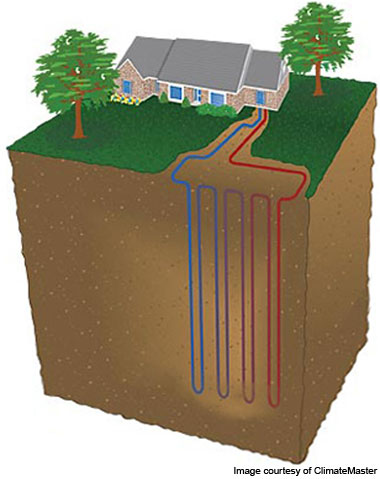
Geothermal heat pumps are very popular in Colorado because they use natural heat from the earth. Geothermal systems are very efficient because they take the stable temperature of the earth to work off heat exchange. This stable constant makes it work better than an air to air heat ecxchange. However, you will need to make an investment to have a geothermal pump. A geothermal pump costs thousands of dollars more than an air pump, so consult a Denver heating and air contractor to see what would be most effective for your home or business. The geothermal system is much cheaper to operate and, will last longer. This is good for Colorado businesses trying for that "green" moniker. Some pumps even provide hot water.

Geothermal pumps come in an open and closed loop designs. The system uses two wells and a pump to pull water from the dump and feeder well. Check with a Colorado HVAC contractor to see if this system will work. A horizontal closed loop system has piping buried several feet below the ground. The heat exchange happens between the piping and the ground. Vertical closed loop systems are good for areas with limited land available, like in a city. Holes are drilled in the earth more than a hundred feet deep. Pipes are filled into the holes. In Denver HVAC contractors will not use closed loop systems because it is hard to drill through the granite rocks. The pipes are connected at the bottom of the holes with a U-bend. Some closed loop systems use a pond or lake with pipes buried deep for heat exchange. Water based heat pumps can even use a water tower and boiler. Water temperature can be maintained at a comfortable warm temperature while still providing heating and cooling.