Thursday, October 14, 2010

How To Start A HVAC Career

Written by: John Murphy

Choosing a HVAC college program

When choosing a HVAC college program, the first thing that you must ascertain is that the college you have selected is an accredited one. This is an extremely important factor, since it means that the training imparted will be at par with the standards specified by HVAC organizations. The most prominent accrediting agencies for HVAC programs are the National Center for Construction Education and Research, the Partnership for Air-Conditioning, Heating, and Refrigeration, HVAC Excellence, North American Technician Excellence and Research, Environmental Protection Agency, and the Occupational Safety and Health Administration. Select a college that has at least one accreditation.

Smaller class sizes are also important, which means you will get personalized attention from the instructors. A good HVAC college will also have an on-campus science lab with professional-grade tools. Visit the campus and get a feel of the place, the classroom, the facilities and talk to the faculty, if possible. Also find out whether they allow any flexibility in scheduling classes for working students, and how you should go about procuring financial aid, if required.

HVAC Colleges

These are just a few of the many HVAC training centers that you will find all over the United States: New England Institute of Technology in Palm Beach, Ferris State University in Michigan, Pennsylvania College of Technology in Williamsport, Pennsylvania, the Refrigeration School in Phoenix, Arizona, Brownson Technical School in Anaheim, California, the Northwest HVAC Training Center in Spokane, Washington, and the National Capital Chapter of the Air Conditioning Contractors of America in Maryland.

You must have a high school diploma or equivalent in order to enroll for a HVAC training program, along with sound math and science skills. College programs usually last from two to four years, and depending on the type of course you select, you will be awarded a certificate, an associate's degree or a bachelor's degree in HVAC.

You will also find a number of community colleges and vocational or technical schools where you can sign up for short-term programs, which last for six months to two years. If you do not have the time to attend college fulltime, you can still get your HVAC training, thanks to online courses. Do make sure that the college is an accredited one.

Once you have successfully completed the HVAC course, the next step is searching for available HVAC jobs in your area. Your college will have campus interviews or will help you with leads for suitable openings in the industry. HVAC employers include HVAC manufacturers, HVAC service companies, HVAC companies, property management companies, mechanical engineering firms, HVAC wholesale suppliers, building owners and many more.

What an HVAC Company Can do For You

Most individuals will have the need for HVAC services at some point. However, most people do not know this as they do not understand the types of services offered by Denver HVAC companies. Find out the typical factors that you would require to get in touch with such companies.

Your nearby HVAC companies is normally the best location to call if you will need an air conditioning unit installed. Whether you just want a little one particular that attaches to your window or desire central air for your total home, this sort of business can install it. Maybe you currently have a unit but require a replacement portion to get it working again. This variety of service is normally supplied by professionals near you, so begin calling around before you attempt to fix it on your own.

The exact same goes for heating units, as an HVAC company generally is in a position to install a heater or furnace for your entire home. If you already have central heating, you may well discover that you will need repairs or replacement components occasionally. This is specifically true if you reside in a cold region that demands you to run the heater nearly all the time. Most reputable companies even offer emergency repairs because the lack of a heater can be risky to homeowners, and may possibly even trigger pipes to freeze and burst if not taken care of quick.

Most people wait until eventually a part on their air conditioner or heater breaks to call their local HVAC companies. Even so, this can be fairly expensive given that components and labor are generally a lot of money. This is why it might be wise to obtain maintenance companies instead of waiting until eventually you require a main restore. Numerous businesses supply tune-ups on your unit, specially at the start of summer time and winter. This can help you conserve on utility bills considering that your program will be running at its most efficient, and can also let you know when replacement parts might be required soon so that you can commence saving cash rather than becoming bombarded with significant restore expenses at one particular time.

The greatest way to prevent significant repairs or sudden breakdowns on critical equipment, this kind of as air conditioners and heating models, is to stay in contact with your nearby HVAC company can conserve you some funds, and can also decrease the anxiety and discomfort that comes with having a broken cooling or heating unit.

When looking for a Denver HVAC company, there are several exceptional options available. Utilizing this assistance your decision can be made in an informed, inexpensive manner.

Thursday, October 7, 2010

Questions for your HVAC Company

Posted by: Denver Heating

Knowing the right questions to ask when you schedule a Denver furnace repair can make all of the difference in the quality of the work that you receive. Opening up a phone book, closing your eyes, and pointing won’t get you the kind of quality service that your furnace needs. Choosing a contractor can be a difficult task because there are so many companies that don’t really care about servicing the customer. All they care about is the bottom line. Remember these questions the next time you call a service company, and you will be able to discover which companies measure up and which ones fall flat on their promises.

Q- What kind of response time do you offer?
A- When picking your Denver HVAC company, you want to find a company that can deliver when you need them the most. Many companies make promises of quick response times, but in the end their idea of quick service is often very different from what you expected. Some companies may just put your name on a list and never actually show up.

Denver Heating and Air Conditioning is different. We are available around the clock, seven days a week, and 365 days a year. We guarantee a 2 hour response time when you call in, and when we say we will be somewhere we are, and we will arrive on time.

Q- How do you charge for labor?
A- It seems like every HVAC company has their own formula for determining how much they will charge their customers for labor. They may charge on price for the first hour and then a different price from the following hours, and when the work is done, suddenly all of these extra fees appear on top of the cost of the repairs. How are you going to figure out what you are going to be charged?

Denver Heating doesn’t mess around with complicated labor equations. Instead, the price they quote is the price you pay. Day or night, Four Seasons does not increase their prices because they came out after a certain hour or on a certain day. The service technician from Four Seasons will determine the cost of the repair and write it up for the customer to agree upon. Once the repair is finished, you pay the price that was agreed upon before the work was done even if it took longer than expected.

Q- Do you guarantee your work?
A- There are far too many Denver HVAC companies that do not warranty their work. Furnace repairs can be very costly depending on what goes wrong with your system, and the last thing you want to do is spend loads of money on work that isn’t guaranteed. When a company doesn’t offer a significant guarantee with their work, you can assume that they are just out for your money, and they can care less if they actually get the furnace to run.

With Denver Heating you won’t have this problem. Denver Heating stands behinds its work with their 100% satisfaction guarantee, and that doesn’t just apply to furnace repair. Any service you have done by Denver Heating is guaranteed, and we want you to be satisfied with the work performed no matter what. Also, the parts and labor performed on your unit will have a specific warranty depending on what you are having done. Make sure to ask our technicians what kind of warranty comes with the parts on your unit, and we are sure that you will be very pleased with what we offer.

Q- Do you use subcontractors?
A- Many heating and air conditioning companies will hire outside subcontractors to complete the jobs that they are hired for. When a company uses this practice, you will never know what kind of technician you are getting in your home. Also, these companies will often leave you hanging in the event that the subcontractor makes a mistake.

A Four Seasons technician actually works for Denver Heating. They wear our uniforms and drive our trucks, and we make sure that they are either NATE or EPA certified. They have to pass our quality standards before they are ever allowed to service a customer’s home. Unfortunately, mistakes can happen, but when they do, you can have confidence that Denver Heating will stand behind their 100% satisfaction guarantee and not rest until the job is done right.

In this ruff economy, you need to know that your money is being spent right when you need a furnace repair. You don’t want to waist it on a contractor who is really just a scam artist. Take control of the situation and be an educated consumer. Ask these questions before you schedule your appointment and you will find a reliable company. Denver Heating and Air Conditioning can proudly say that they have answers to each and every one of these questions and more. Trust Four Seasons with your furnace, and we guarantee you will not be disappointed.

Tuesday, September 14, 2010

Soldering as a HVAC Repair Method


The big payday on HVAC jobs is when you get to replace a whole system. However there are many simple fixes, both temporary and permanent that can be used to save customers a great deal of money. One of these is soldering metal.

One of the first things that hvacr techs learn about soldering is that you cannot solder copper pipe with water still in the pipe. Before any repairs can start, the pipe needs to be drained, closed and dried. This causes problems because sometimes if there are multiple leaks say in a water cooling system, water might keep migrating down as you try and repair the pipe.

Fortunately there are a few tricks to try and work around this problem. One is called the bread trick. Take some white bread without the crust and stuff it into the pipe above the area you need to solder. This only works for very slow leaks, but it is effective because the bread swells as it absorbs water. Once water pressure is restored, the bread will dissolve. However you may need to remove strainers along the system.

The more technical method that I have seen HVAC in Denver workers use are pipe freezing machines. This freezes the pipe and its contents solid so that it can be cut. This is much more expensive and uses highly specific equipment, however it works perfectly, unlike the jerry rigged bread method. Just be careful to only freeze the area you are working on. Freezing the whole pipe can cause it to burst.

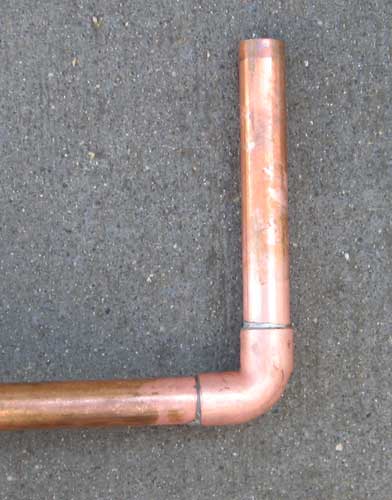
When working on pipes that contain coolant, Denver air conditioning technicians use different technology called brazing. Brazing uses oxyacetylene for refrigeration. Instead of lead, use silver soldering. Silver chemically binds with copper to make a leak free joint. The oxyacetylene torches are used to heat the whole pipe up to above five thousand degrees Fahrenheit. Of course this means you need to use the proper safety equipment for these kinds of torches. This especially means a welding mask to save your eyesight.

To properly braze, you need to clean the pipe. Once it sets it should be solid. The inner and outer joints need flux applied before heat. The torch should not heat the solder. Instead evenly heat the pipe so that the solder makes a uniform fit. Use just enough solder for a tight fit. Too much and it could break up and foul up equipment. The final step is to perform a pressure test. Apply soap to the outside of the pipe and look for bubbles indicating an improper seal. Once pressure is applied, any drop indicates a leak.

Tuesday, August 24, 2010

Electrically Ignited Pilots in Furnaces


Standing pilot lights are quickly becoming obsolete. A standing pilot light presents fire and carbon monoxide dangers along with wasting gas. Electrical furnace starters are now standard on all high efficiency Denver heaters. With electric ignition, your furnace only uses energy when it needs it. This by itself can increase your SEER rating significantly.

The really modern systems light the burners directly. This is called hot surface furnace ignition. This means that when the thermostat calls for heat, a hot igniter above the burners heats up and then ignites the gas when it is released. Other models electrically ignite a pilot whenever heat is needed. Not only furnaces, but any kind of heater using gas flame can benefit from electronic ignition. Denver HVAC companies install electric ignition systems in boilers and water heaters as well.

An important part of the ignition system is proving the pilot or burner flame is lit. The whole system fails if the solid state controls do not know if the burner is on or not. The fail safe will shut down the system if the sensors do not sense a flame. This is because it is dangerous to leave the flame burning without regulation. It is also to prevent the heater from spewing un-ignited gas into the building. If you smell gas or your furnace has shut off unexpectedly, call a Denver furnace repairs company immediately.

Often the flame sensor is just fowled with residue and once cleaned by a HVAC tech it will operate normally. However this system is still much more reliable than a standing pilot furnace. These pilot lights blow out and need to be re-lighted manually. This defeats the purpose of the pilot being lit all the time.

Along with electronic ignition, two other ways to get the most out of your heating fuel are to get air handlers with built in induction blowers, and condensing heat exchangers. The blower forces air into the combustion chamber, which aids in both combustion and exhaust of gases. The condenser is an additional heat exchanger that takes the heat out of the water vapor byproduct of natural gas combustion. These devices save energy and also increase the air quality of the home.

Monday, August 23, 2010

HVAC Ductwork Insulation and Maintenance


Your HVAC ductwork is the series of tubes that carry treated air around the building. If you are installing a new central air or heat pump system in your house, you should make sure the ductwork that will carry your new high efficiency air conditioner is up to par with the system. As all the air flows through these ducts, any leaks or problems will ruin the effect of the whole system.

When installing or diagnosing a system for Denver HVAC repairs, a good technician will inspect all the ducts. First off he is looking to see if the existing duct system will match the new air handler that was installed. This will also show if there are any leaks or other problems. Finally, ducts should be insulated and routed in a certain way to maintain safety. This process is called checking for ductwork integrity.

The average residential HVAC system has some leakage. So you can get just as much cost saving some times in fixing the ducts as buying a new high efficiency system. If 20% of the air is leaking, then the system will have to work harder. This leads to higher bills and possible Denver furnace repairs. So do not feel shy to ask the HVAC tech to check the integrity of the ducts. It is their job after all.

In some locations your HVACR system needs special consideration. In wet areas or flood plains, the duct work needs to be water tight. After a flood, you will probably need to replace the insulation, but if the ducts were not sealed you might have to replace the ducts as well as any parts that were damaged by infiltrating water. A water tight duct is also obviously air tight.

To maintain the efficiency of this well sealed ductwork, your Denver HVAC company will install insulation around it. The insulation also serves to protect the inside of your home from the temperature variations caused by hot or cool air flowing. At these temperature change points moisture tends to accumulate. As water saturated air below the dew point gets in contact with warm beams, then it will sweat. This ruins the ducts and can cause mold and mildew problems. To counteract this make sure there is a vapor barrier between the treated air and the outside.


Tuesday, August 17, 2010

HVAC Economizers

air conditioning services denver
HVAC economizers are called DDC systems in industry parlance. DDC stands for Direct Digital Control, basically computerized controls of HVAC air handlers instead of using mechanical systems to control the use of the air handler and other components. Computer technology has been able to provide dramatic energy savings for years, but the real advance recently is the ease of use for air conditioning services Denver technicians.

Instead of being pre-installed at the factory, now your HVAC technician can modify the DDC settings on site. This is a powerful new tool for Denver HVAC companies because they can customize air handler use or program zone control by site. Economizers do need extra ductwork and equipment to maximize their efficiency. One way economizers do this is by using outside air for heating or cooling when the conditions are right. When the outside air is at a temperature compatible with your comfort settings, there is no reason to use mechanical heating or cooling to do extra work.

Commercial building codes in Colorado require a certain amount of air to be circulated through the building every hour. There is no need to treat the excess air needed beyond the heating requirements. The dampers that control this excess air are often inadequate compared to digital economizers. If not calibrated after installation, these dampers often malfunction to the point that the building owners disable the devices within a year.

A common economizer in furnaces uses the heat from exhaust flue gases to make full use of boiler energy. These units are not overly complicated but it might be easier to use a specialty furnaces services Denver company for these kinds of installations or repairs. The economizer digital controls should work directly with the HVAC control system. These new digital units spit out charts and graphs of performance and can be monitored remotely.

In order for the DDC economizer to do its job correctly, it needs inputs, or information gathering sources so it can see how the HVAC system and the interior of the building are operating. One sensor should be a CO2 sensor inside the building. This allows the air handler to decide when to operate without an air damper. When C02 is at safe levels, the system will re-condition the air, significantly saving energy venting cooled air outside. The sensor is built to override everything else for safety. Two more sensors should gather outside air temperature and humidity. One way the unit can maintain good indoor air quality is to keep the building at slight pressure. This stops air infiltration which can lead to unwanted moisture or pollutants in the building.